
The Evolution of a Regional SWAT Team
In Walnut Creek the relationship between the SWAT team, Crisis Negotiators and their Tactical Dispatchers is the backbone of every high-stakes operation. This bond is forged through countless hours of training, mutual respect, and an unwavering commitment to safety and precision.
For years, the Walnut Creek Police Department had its own SWAT team, but it was always a small unit, barely enough to handle critical situations. Imagine a high-stakes emergency, a barricaded subject for whom an arrest warrant has been issued, and only eight officers to surround and secure the
scene. Clearly—this wasn’t enough.
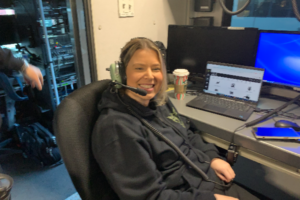
Recently, I had the privilege of sitting down with Lt Jeff Slater, SWAT Team Commander and Megan Schmidt, Tactical Dispatcher of the WCPD to take a deeper dive into what makes for a successful SWAT operation and how the team has expanded over the years. I also had the extraordinary opportunity to document the December 6 cross-training exercise to help write this article.
How SWAT Grew – A Call for Reinforcements
Nearby agencies faced the same personnel shortage dilemma, lacking headcount to form their own SWAT teams. The solution? A bold idea emerged from several county managers: a regional SWAT team. Pooling resources from multiple agencies was the way to go. Today, those agencies include Walnut Creek, Pleasant Hill, San Ramon, Martinez, and BART (for all Contra Costa stations). A call from one is a call to all.
To be sure, this team isn’t just about headcount; it is about expertise, coordination, and the ability to respond swiftly and effectively to any emergency. This collaboration brought a new level of safety and preparedness to the region.
Today, SWAT is made up roughly of 25 officers (divided into tacticians and snipers), 16 crisis negotiators, 5 Drone pilots and 5 Tactical Dispatchers, all of whom adhere to a strict training schedule. The Tacticians will be those officers who provide entry to the target house and a Sniper Team, which is strategically located (as we have seen play out on a movie set) to provide observation, intelligence, and precision marksmanship.
Communication and Coordination
The heartbeat of every operation is real-time updates. Communication must flow seamlessly between the dispatcher and the officers. It should paint a vivid picture of the scene. Detailed descriptions of suspects, potential threats and exact location details are relayed with precision.
Lt Slater emphasizes that “active listening” is paramount in this scenario. Every word matters. Megan adds that Dispatchers need to speak with absolute clarity, their instructions are crisp and concise, leaving no room for misinterpretation. Because of the many moving parts involved in a SWAT operation a few years ago an app known as PRYME INFIL (prymeinfil.com) was developed and sits on all SWAT team phones. PRYME provides real-time operational planning, coordinates communication, and records management. In a nutshell, this app is a game-changer in the world of law enforcement technology that keeps everyone on the same page.
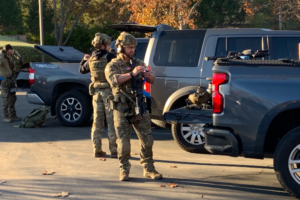
Only the designated Team Leader in the field communicates with dispatch who then communicates out to the other team members providing instructions on next steps. Every maneuver is executed with surgical precision, including securing the surrounding areas and keeping other emergency services in the loop. This ensures that situational awareness remains a top priority.
Officer rank is a moot issue. An expert Team Leader, who can be a Corporal, may be relaying instructions to higher ranking officers. As Lt Slater puts it, “Egos have no place on a SWAT team, only a collective sense of duty and mission.”
What is an example of a Successful SWAT Operation?
During 2023 the SWAT Team was called out about once per month on average. Lt Slater and Megan described an operation when the team was called to a residential neighborhood where a wanted suspect had barricade himself inside of a house threatening violence.
The team quickly surrounded the house, securing all escape routes and utilizing a fully equipped bullet-proof mobile vehicle (a.k.a. Bearcat) while the tactical dispatchers and SWAT Commanders monitored the situation from a designated command post. Meanwhile, the crisis negotiators ran a background profile on the suspect to gather as much intel on the suspect and the people involved. The SWAT team wants to know the psychological makeup and potential threat posed by the suspect.
Next, various methods of communication were attempted to contact the suspect and others in the house, including a bullhorn and telephone. The bullhorn is particularly useful in announcing that a specific occupant at a specific location (i.e., Joe Smith @ 123 Main St) is surrounded and there are no escape routes. This also alerts nearby residents to remain behind locked doors.
The Crisis Negotiators became engaged, and after a fourteen-hour standoff the suspect surrendered peacefully, with no injuries; the two main objectives of a successful operation.
Lt Slater mentions that the occupants were instructed to come out showing they are not holding anything in their hands. The SWAT team wants to minimize surprises!
Before the regional SWAT alliance, establishing a perimeter around the house would have proven problematic. (There are times when the local FBI has been called in for particularly egregious situations). Megan admits to the high-pressure nature of being a Tactical Dispatcher, but she credits adaptability, multitasking, organizational skills and stress management as vital to her role, which also involves continuous training.
Training and Familiarity
On December 6th, 2024, a hostage simulation exercise took place in the Rossmoor area involving all five agencies, and it was impressive. I was shown the equipment used, including sophisticated communications vehicles housing the Dispatchers and the bulletproof Bearcat used when approaching the target is needed. If you look closely, you can see the multiple rounds the Bearcat took during last
year’s standoff.
Joint training sessions occur three times a year and are a key component to the relationship between SWAT teams and dispatchers. These sessions allow both parties to understand each other’s roles and challenges, fostering a sense of mutual respect and trust. Training together allows the Dispatchers and SWAT officers to develop a shared language and set of procedures that enhance their ability to work together seamlessly.
The Training Scenario
Lt Slater has written a script for the team indicating an incident at a fictitious pharmacy where the suspect enters demanding opioids and money while holding two hostages including the pharmacy owner who has been assaulted. Police vehicles surround the pharmacy, and
drones are launched to get a better view of its interior. Meanwhile, a phone line has been set up for negotiators to make contact with the suspect (“Jake”), establish rapport, demonstrate empathy, and hopefully deescalate the situation.
Before the exercise begins, Lt Leysy Pelayo of the San Ramon PD gathers the SWAT team to review the scenario and the primary objective, which is to neutralize the threat and secure the safe release of the hostages. During the exercise it will be Lt Brian Leonard of the Pleasant Hill PD who will be the overall commander deciding on how the mission eventually plays out.
As the simulation unfolded, the SWAT team faced a barrage of challenges. Jake, played by a role-player, was clearly agitated and unpredictable, alternating between threats and moments of calm. He has a handgun, but we are unsure if it is loaded. Throughout the exercise the SWAT negotiator remains calm, empathizing with Jake’s frustration, and asks about his well-being. Active listening and maintaining control of the conversation is the key learning point for the team.
While the main objective of surrendering and safe release of hostages is the usual outcome, in this case Jake became erratic and threatening, making a tactical intervention necessary with the team having to navigate a complex maze of rooms, each a potential danger zone. The training exercise was followed by a debriefing led by Lt Pelayo of SRPD. Every detail of the operation was analyzed, from the initial response to the final apprehension. The team identified areas for improvement, such as communication and coordination. But they also celebrated their success, acknowledging the importance of patience, empathy, and tactical skill.
Conclusion
The relationship between SWAT teams and Dispatchers is a symbiotic one, characterized by effective communication, coordination, safety, support, and mutual training. This partnership is essential for the successful execution of high-stakes operations, ensuring that both Dispatchers and SWAT officers can perform their duties with confidence. Through their collaboration, they form a cohesive unit that is greater than the sum of its parts, fully committed to maintaining public safety and achieving successful outcomes in the face of dangerous circumstances.
By Frank Napoli, Resident since 1996